

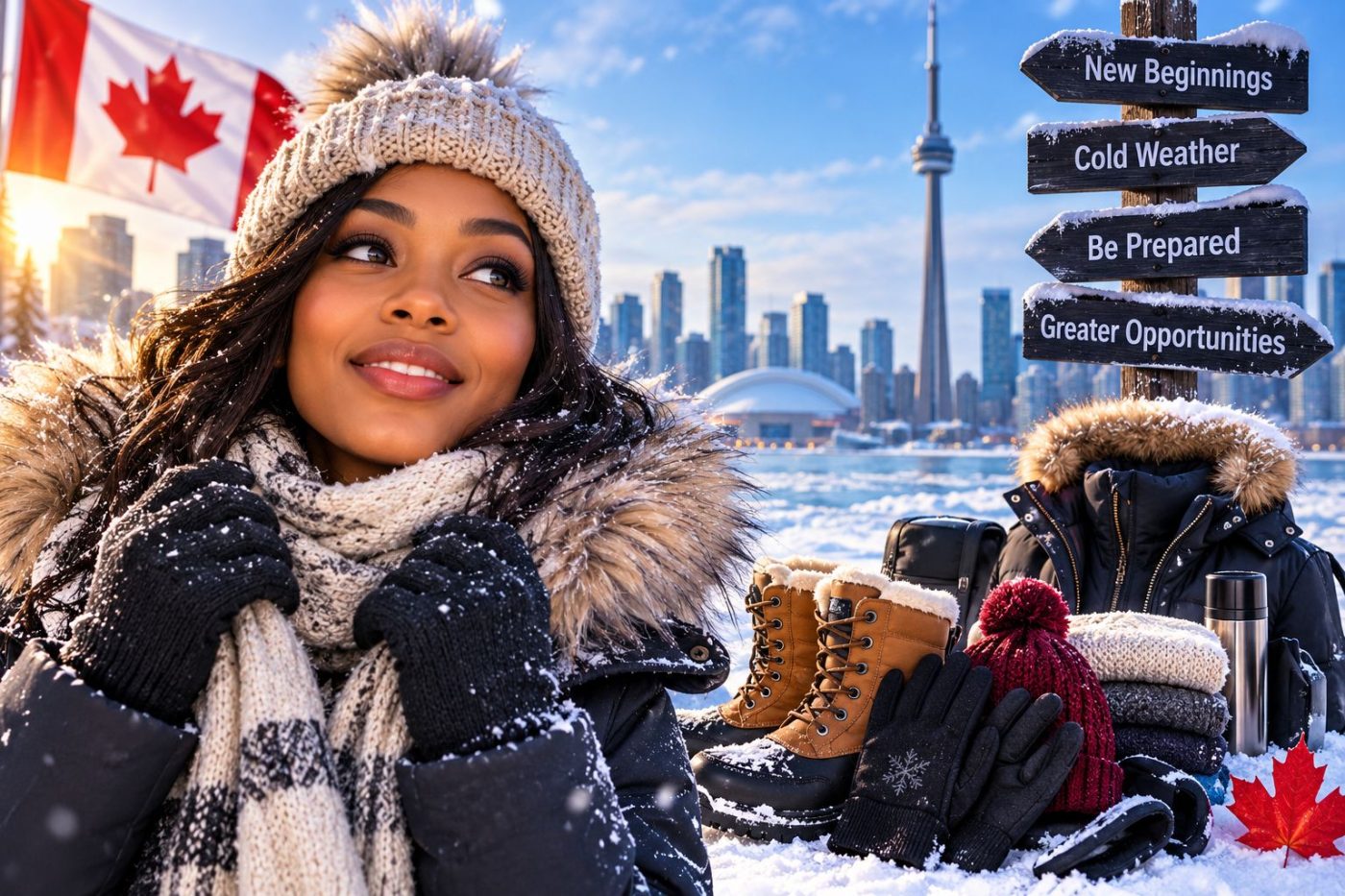
If you're moving to Canada for the first time, there is one thing you should prepare for before the snow arrives:
Winter is not just another season in Canada.
For newcomers coming from warmer countries, the combination of freezing temperatures, snow, icy sidewalks, shorter days and strong winds can take some getting used to.
The good news? You don't need to spend a fortune to prepare.
With the right clothing, a few useful items and some basic knowledge, your first Canadian winter can be much easier than you expect.
Canada's official newcomer guidance recommends having a winter coat, boots, gloves and a hat. It also notes that winter conditions vary significantly by region. For example, parts of southwestern British Columbia generally experience more rain than snow.
So before the temperatures start dropping, here's what you should know.
1. Don't wait for the first snow to buy winter clothes
This is probably the first mistake many newcomers make.
You don't want to be standing outside your apartment on the first freezing morning wondering where to find a proper winter coat.
Start shoppingbefore winter arrives.
Your basic winter wardrobe should include:
A warm insulated winter jacket
Waterproof or winter boots
Warm socks
Gloves or mittens
A toque/winter hat
A scarf or neck warmer
Thermal or base-layer clothing
Warm pants or winter trousers
Environment and Climate Change Canada specifically recommends dressing in layers and using a wind-resistant outer layer. Covering exposed skin becomes particularly important during extreme cold.
You don't necessarily need an expensive winter coat
A good winter jacket is important, butexpensive doesn't automatically mean better.
Look for:
insulation
wind resistance
water resistance
a hood
adequate length
good zipper and cuffs
If you're on a budget, compare prices online before buying.
👉A good place to start:
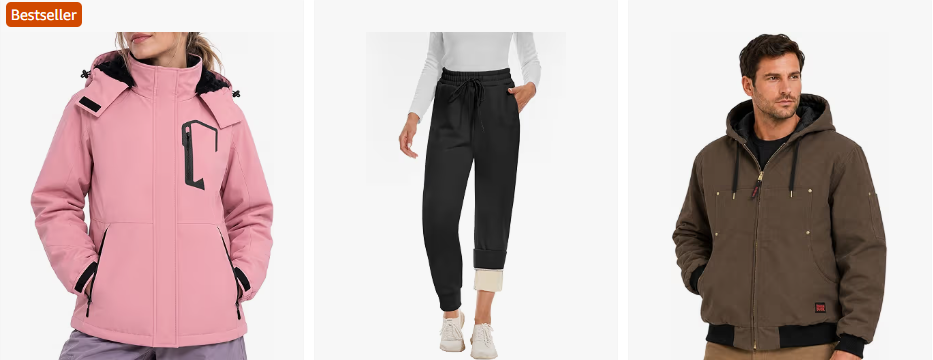
Browse affordable winter jackets on Amazon Canada
Prices, availability and sizing can change. Check the product details before purchasing.
2. Your regular sneakers may not be enough
This is one of the biggest surprises for newcomers.
A pair of everyday sneakers can work perfectly well in mild weather, but snow, slush and ice are a different story.
Your winter boots should ideally be:
Warm + waterproof + insulated + good traction.
The traction part is particularly important.
Snow can melt during the day and freeze again later, creating icy surfaces that can be surprisingly slippery.
Canada's official winter guidance recommends appropriate waterproof footwear and warns about slippery and icy conditions.
💰 A simple money-saving strategy
You don't necessarily need several pairs of expensive boots.
For your first winter,one good pair of waterproof insulated bootscan cover most everyday situations.
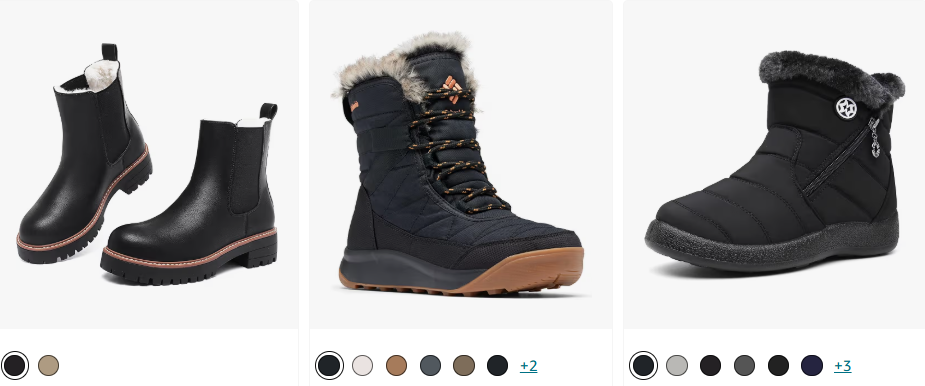
👉See affordable winter boot options on Amazon Canada:
Shop winter boots on Amazon Canada
3. Don't underestimate gloves
Your hands can become uncomfortable surprisingly quickly in freezing weather.
A basic pair of gloves may be enough for short trips, but if you'll be outside for longer periods, look forinsulated winter gloves or mittens.
Mittens can also be useful because keeping your fingers together can help retain warmth.
For everyday use, you may also want gloves that allow you to use your phone without taking them off.
👉Affordable winter gloves:
Browse touchscreen winter gloves on Amazon Canada
4. The secret isn't always a thicker jacket — it's layers
If you've never experienced a Canadian winter, this is one concept worth learning early:
Layering.
Instead of relying on one enormous piece of clothing, you can combine several layers.
Layer 1 — Base layer
This sits directly against your skin and helps manage moisture.
Think:
thermal shirt
thermal leggings
merino wool or synthetic base layers
Layer 2 — Insulation
This layer keeps you warm.
Examples:
fleece
wool sweater
insulated mid-layer
Layer 3 — Outer shell
This protects you from:
wind
snow
rain
freezing conditions
This approach is particularly useful because you can remove a layer when you enter a heated building.
Canada's winter safety guidance recommends wearing multiple layers beneath a wind-resistant outer layer.
A small purchase that makes a big difference
If you already own a decent winter jacket, you may not need to replace your entire wardrobe.
A few thermal base layers and warm socks can make your existing clothes much more useful.
👉Check affordable thermal base layers on Amazon Canada:
Shop thermal winter layers on Amazon Canada
5. Learn about wind chill
One of the first Canadian weather terms you should understand is:
Wind chill
Suppose the actual temperature is-15°C.
If the wind makes it feel like-25°C, weather reports may describe the conditions using the -25°C wind-chill value.
That doesn't mean the actual air temperature suddenly became -25°C. It describes how cold the conditions can feel on exposed skin.
Canadian authorities specifically advise newcomers and residents to pay attention to wind chill during very cold weather.
So don't just look at the temperature.
Before leaving home, check:
Temperature + wind chill + weather alerts.
The WeatherCAN app can also provide local weather alerts.
6. Walking in winter is different
Your first winter may change the way you move around your city.
A journey that normally takes 10 minutes can take longer when:
sidewalks are covered in snow
surfaces are icy
visibility is reduced
snow needs to be cleared
buses are delayed
Give yourself extra time.
And don't assume that a sidewalk that looks wet is safe.
It could beblack ice.
Walk more slowly and take shorter steps when conditions are slippery.
7. If you have a car, prepare it before winter
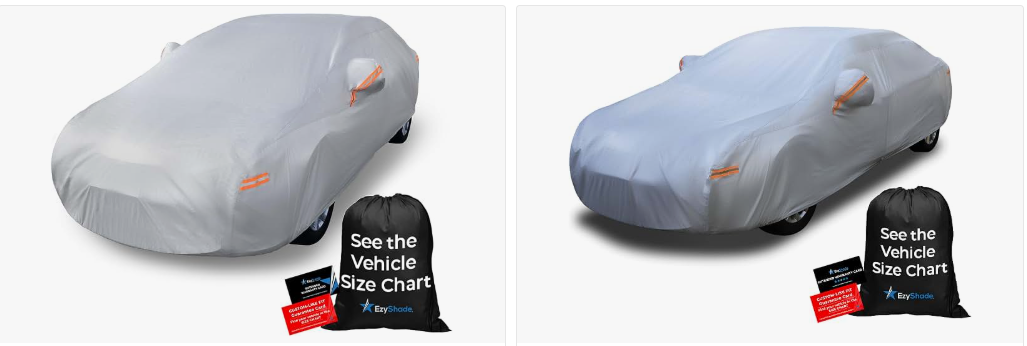
This deserves its own section because winter driving is a completely different experience.
Transport Canada recommends keeping winter supplies in your vehicle, including items such as:
a snow brush
an ice scraper
blankets
extra gloves
a hat
extra socks
a flashlight
jumper cables
water and snacks
a small shovel
windshield washer fluid suitable for winter conditions
And depending on where you live,winter tires may be particularly important or legally required. Canada's federal guidance notes that requirements vary by province or territory.
One thing you should never do
If your vehicle gets stuck in snow, make sure the exhaust pipe is clear.
A blocked exhaust can allow carbon monoxide to build up inside the vehicle.
8. Your home needs preparation too
Your first Canadian winter isn't only about surviving outside.
You also need to understand how your home handles cold weather.
Before temperatures drop significantly, check:
heating system
windows and drafts
doors
pipes
smoke alarms
carbon monoxide detector
Canada recommends certified carbon monoxide alarms with battery backup, particularly near sleeping areas.
Carbon monoxide is especially important during the colder months because heating systems and fuel-burning appliances are used more frequently.
And remember:
Never use a fuel-burning generator, barbecue or camping stove inside your home, garage or other enclosed space.
9. Build a small winter emergency kit
You don't need to build a survival bunker.
A simple emergency kit is enough for most households.
Consider keeping:
flashlight
spare batteries
first-aid kit
bottled water
non-perishable food
blankets
extra warm clothing
power bank
basic tools
Canada recommends having an emergency kit and household emergency plan for severe winter conditions.
A small rechargeable flashlight or power bank can be particularly useful during a winter power outage.
10. What should you actually buy?
If you're a newcomer trying to keep your spending under control, don't buy everything at once.
Start with the essentials.
Item | Priority |
|---|---|
Winter jacket | 🔴 Essential |
Winter boots | 🔴 Essential |
Gloves/mittens | 🔴 Essential |
Winter hat/toque | 🔴 Essential |
Warm socks | 🔴 Essential |
Thermal base layer | 🟠 Very useful |
Scarf/neck warmer | 🟠 Very useful |
Ice scraper | 🟠 If you drive |
Snow brush | 🟠 If you drive |
Hand warmers | 🟢 Optional |
Ice cleats | 🟢 Useful in icy areas |
And don't forget thatthrift stores and second-hand shops can be useful for reducing the cost of winter clothing. Canada's newcomer guidance specifically mentions reasonable-price shopping options and thrift/donation centres.
Don't spend your entire winter budget in one day
This is probably the most useful advice for a newcomer.
You may arrive in Canada thinking:
"I need to buy an expensive jacket, expensive boots and everything else immediately."
Not necessarily.
Start with the essentials.
Buy your:
first.
Then add thermal layers, better accessories and emergency items as you discover what you actually need.
And compare prices.
Amazon can be useful for inexpensive accessories such as thermal layers, gloves, winter socks and other small items, while local stores and second-hand shops can also be worth checking for coats and boots.
🇨🇦 Your first Canadian winter doesn't have to be scary
Your first winter will probably feel strange.
The first time you see your car covered in snow.
The first time you walk outside at -20°C.
The first time you realize that your normal shoes are completely useless on an icy sidewalk.
But after a while, you learn the routine.
Check the weather.
Dress in layers.
Wear proper boots.
Leave home earlier.
Keep emergency supplies nearby.
And learn to respect extreme cold.
Canada's official guidance is clear that extreme cold can become dangerous quickly, particularly when wind chill is significant.
The goal isn't to avoid winter.
It's to be prepared for it.