
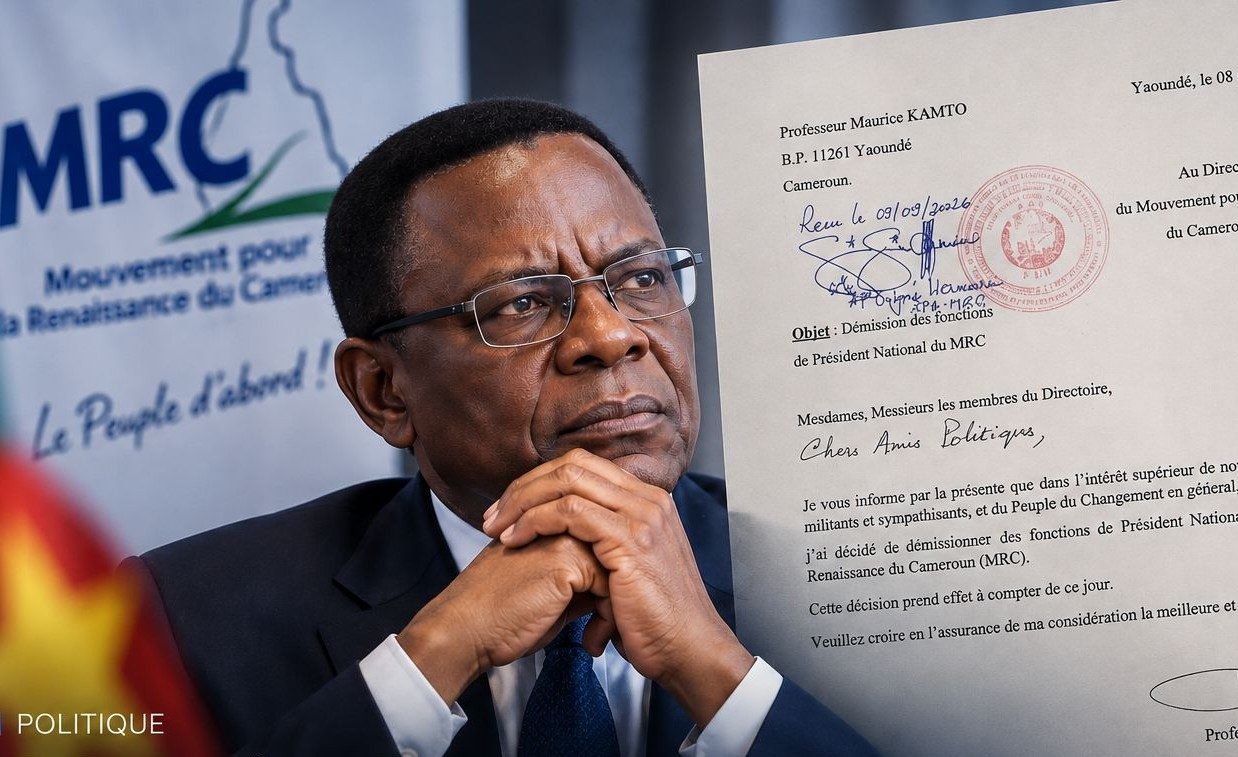
Maurice Kamto has resigned as President of Cameroon’sMovement for the Renaissance of Cameroon (MRC), bringing an unexpected new turn to the opposition party’s history.
In a letter datedSeptember 8, 2026, Kamto announced that his resignation would take effect immediately. He said the decision was made in what he described as the “higher interest” of the party, its members and supporters, as well as the broader movement he refers to as the “People of Change.” He also made clear that he wasremaining a member of the MRC.
The announcement comes less than a year after Kamto returned to the leadership of the party and at a particularly sensitive moment, as the MRC prepares for the next legislative and municipal elections.
The question now is bigger than who will replace him:
What does Kamto’s departure mean for the future of the MRC and Cameroon’s opposition?
An unexpected departure
Maurice Kamto had been one of the most recognizable figures of Cameroon’s opposition for more than a decade.
He led the MRC from its creation in2012and became particularly prominent during the 2018 presidential election, when he finished second according to official results and subsequently challenged the outcome.
His departure from the MRC presidency therefore represents a major political development.
What makes the announcement even more significant is its timing.
Kamto had returned to the presidency of the party following an extraordinary convention held onDecember 21, 2025, after his attempt to run in the 2025 presidential election under the banner of theManidemwas unsuccessful.
His return to the MRC leadership, however, soon became the subject of an administrative dispute.
A leadership already under pressure
The resignation comes against the backdrop of growing tensions between the MRC and Cameroon’s Ministry of Territorial Administration, commonly known asMINAT.
In August 2026, the ministry indicated that it had not deemed it appropriate to formally recognize the proceedings of the MRC's December 2025 extraordinary convention.
The administration questioned the legal status of the institutions established during that convention, including the party's national leadership.
The MRC rejected that position, arguing that its December convention had followed its own internal procedures and that Kamto had been legitimately re-elected as party president.
The dispute created an increasingly complicated situation:the MRC leadership considered itself legitimate, while the administration questioned the recognition of that leadership.
It was in this context that Kamto announced his resignation.
Mamadou Mota also steps down
Kamto was not the only senior MRC figure to leave his position.
On the same day,Mamadou Mota, the party's First Vice President, also announced his resignation.
Mota said his decision was linked to what he described as persistent pressure from the administration and argued that stepping aside would allow the party to continue pursuing its political objectives.
The simultaneous departures of two of the party's most prominent leaders have inevitably raised questions about the extent of the pressure surrounding the MRC.
However, the precise motivations behind Kamto's own resignation remain open to interpretation.
His letter itself does not provide a detailed explanation.
Is this the end of Kamto's political influence?
Not necessarily.
One important detail has been widely overlooked:Kamto has not left the MRC.
He resigned from the presidency, but he remains a member of the party.
That distinction could prove important.
Stepping away from the formal leadership of the organization does not necessarily mean stepping away from its political direction.
Several scenarios are therefore possible.
Kamto could remain an influential ideological figure within the movement while allowing a new generation of leaders to assume the party's formal responsibilities.
Another possibility is that his departure is part of a broader political strategy designed to reduce institutional pressure on the MRC.
Analysts have also raised the possibility that Kamto could eventually seek another role within the party or re-emerge as a central figure during a future convention.
For now, however, those possibilities remain speculation.
Who will lead the MRC?
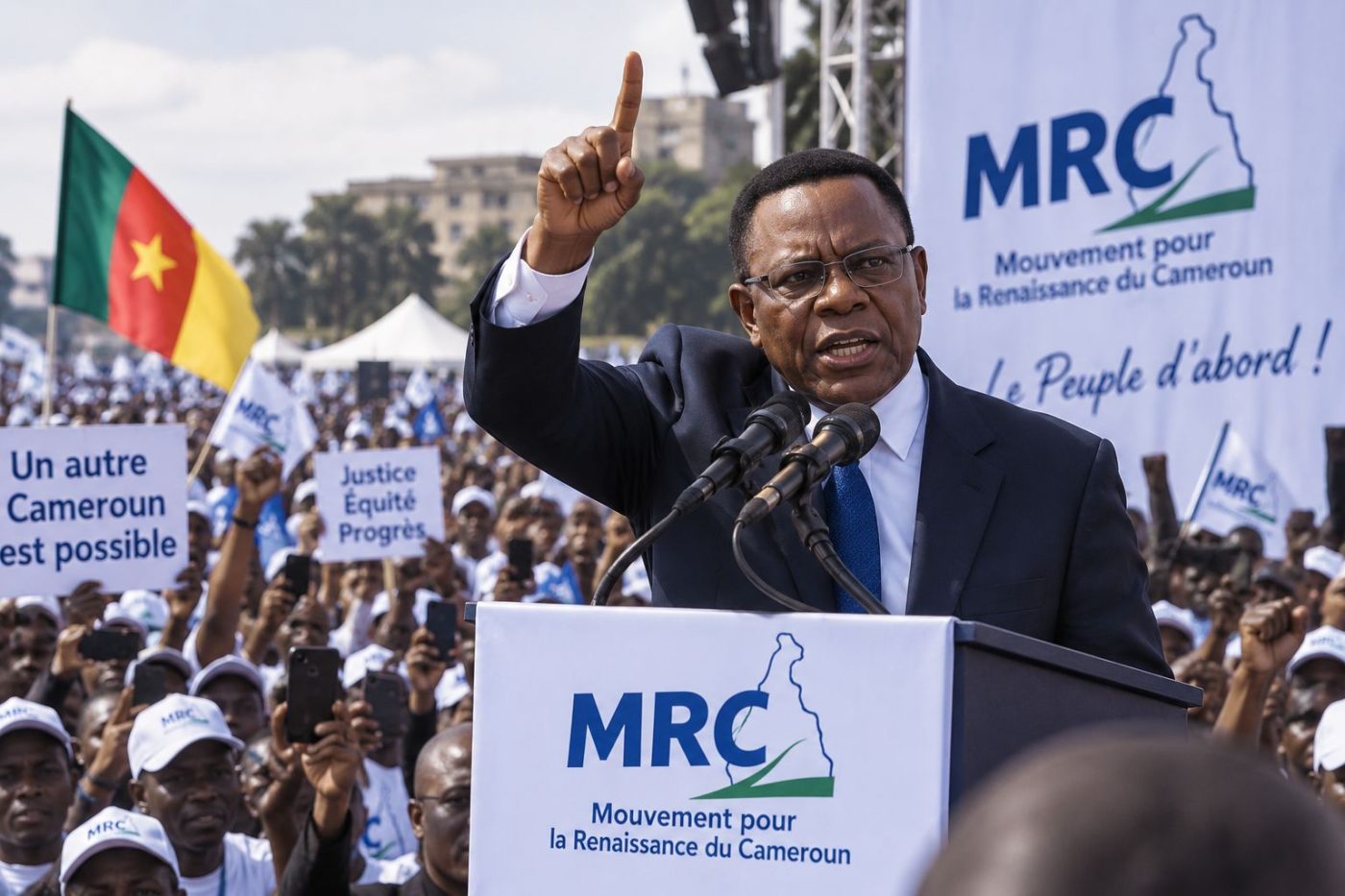
With Kamto and Mota stepping aside, the MRC has entered a period of transition.
Tiriane Balbine Nadège Noah, previously a vice president of the party, has taken over the leadership on an interim basis while the party prepares for a new extraordinary convention.
The MRC has also begun the process of receiving applications for the party's next president.
According to reports, candidates have untilOctober 9, 2026to submit their applications, ahead of an extraordinary convention expected to determine the party's new leadership.
This succession process could become one of the most important moments in the MRC's history.
The question is whether the party will attempt to preserve Kamto's political line or use the leadership transition to redefine its strategy.
A party facing a new political reality
The timing of the transition is particularly important because Cameroon is heading toward new legislative and municipal elections expected in2027.
The MRC will therefore have to make important decisions in a relatively short period.
Who will lead the party?
What political strategy will it adopt?
Will Kamto remain actively involved?
Will the new leadership attempt to broaden the party's appeal?
And perhaps most importantly, can the MRC maintain its unity during a leadership transition of this magnitude?
These questions will likely shape the party's future far more than the resignation itself.
From presidential candidate to political elder statesman?
Kamto's political trajectory has already gone through several major turning points.
In 2018, he emerged as one of Cameroon's most prominent opposition figures after running for president under the MRC banner.
In 2025, he attempted to return to the presidential race under the Manidem banner but was ultimately excluded from the final list of candidates. The Constitutional Council upheld that decision in August 2025.
He subsequently returned to the MRC leadership.
Less than a year later, he has once again stepped aside.
That sequence raises a broader question about his political future.
Is Kamto preparing to play a different role within the opposition?
Or is this simply a response to the institutional difficulties surrounding the MRC's current leadership?
At this stage, there is no definitive answer.
The bigger question: what happens to the MRC?
The MRC was built around a strong political identity and, to a significant extent, around Kamto's leadership.
His departure from the presidency therefore creates both a challenge and an opportunity.
The challenge is obvious:maintaining cohesion while replacing a leader who has been at the center of the party since its creation.
But the transition could also give the MRC an opportunity to renew its leadership, strengthen its internal structures and present a broader political image.
The party's next convention will be crucial.
It will not simply determine who replaces Kamto.
It could determinewhat the MRC becomes after Kamto.
A new chapter for Cameroon’s opposition
Maurice Kamto's resignation marks the end of an important chapter in the history of the MRC.
But it does not necessarily mark the end of his political influence—or of the party's ambitions.
For now, the MRC remains in transition, with Tiriane Noah overseeing the party while a new leadership is prepared.
The coming weeks will reveal whether Kamto's departure represents a retreat, a strategic repositioning, or the beginning of a deeper transformation within the opposition movement.
One thing is certain:
The MRC will not look exactly the same after Maurice Kamto's departure from its presidency.
And Cameroon’s political landscape will be watching closely.
Vous pouvez visitez le siteofficiel du MRC.